
X2 Welfare
Who it is for
Festivals and outdoor events. Concerts and arenas. Sports tournaments and fan zones. Conferences and exhibitions. Hotels, hospitality and venues. Any event where people may need looking after, whatever their age.
Welfare
Safeguarding protects people from harm. Welfare looks after everyone who needs a hand on the day: the person who is overwhelmed, unwell, separated from their friends or simply not coping. X2 Welfare brings the two together, so your event has one joined-up team looking after the people in it.
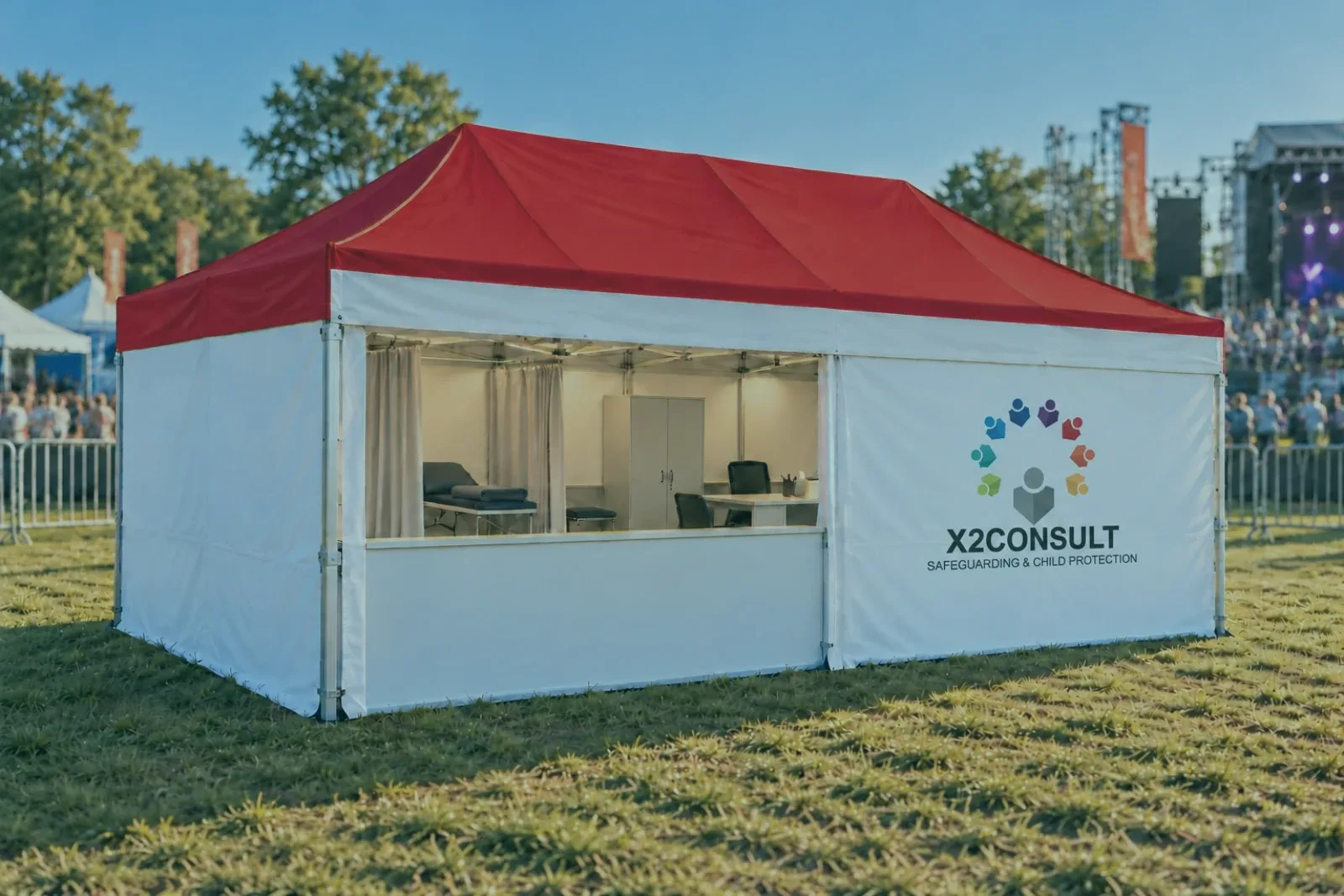
A staffed, clearly signed space where anyone can come for help, a rest and a calm conversation away from the crowd.
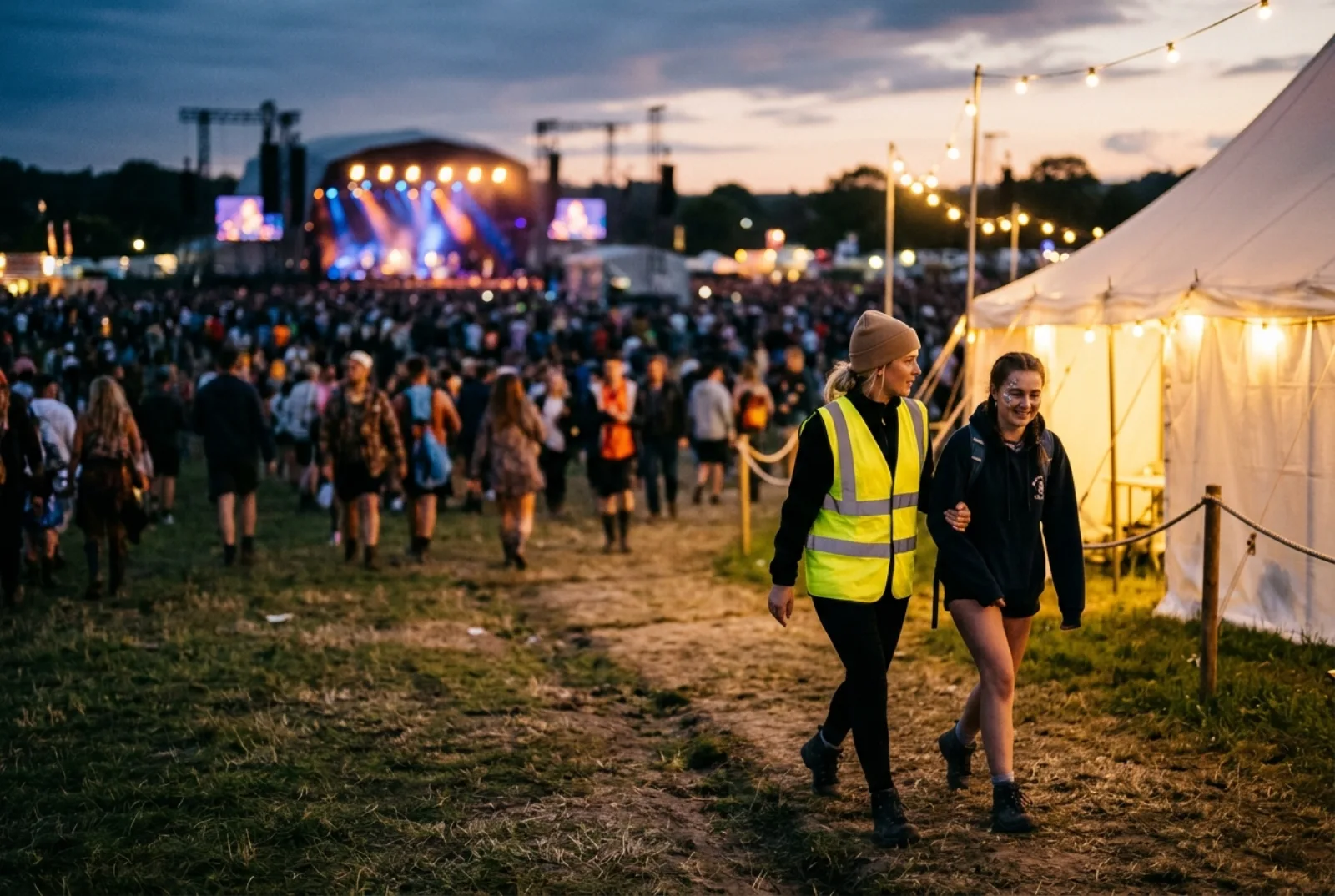
Welfare staff moving through the event, spotting people who are struggling and stepping in early.
Care for children, young people and vulnerable adults, working hand in hand with the safeguarding team and the event's Designated Safeguarding Lead.
A clear process for lost children and separated groups, from the first report to a safe reunion.
Practical, non-judgemental support for people who are intoxicated, in crisis or in distress, with a direct line to the medical and security teams when it is needed.
Knowing when a situation needs the medics, security, the police or a social care referral, and making that handover cleanly.
Plan the site
Place welfare points on the plan and see what X2 Welfare does at each one. Nothing is sent anywhere.
At this point
Choose a spot on the plan to place a welfare point there.
Welfare points placed
None yet.
Why welfare matters
Most people at an event have a good day. Some do not. These published figures show why welfare deserves a plan of its own. The Purple Guide, the events industry's guide to running safe events, gives welfare its own chapter, including welfare services and support for vulnerable attendees.
1 in 4
Adults who experience at least one diagnosable mental health problem in any given year, according to NHS England.
25.8%
Of 16 to 24 year olds in England identified with a common mental health condition in 2023/4, up from 17.5% in 2007, according to NHS England's Adult Psychiatric Morbidity Survey.
9,809
Deaths from alcohol-specific causes registered in the UK in 2024, according to the Office for National Statistics.
The people
Our welfare staff understand safeguarding. They work to your event's Designated Safeguarding Lead, and they know when a situation needs someone else. This is what they are trained to do on the day.
Recognising the signs that a child, young person or vulnerable adult may be at risk, and taking every concern straight to the event's Designated Safeguarding Lead.
Distress, intoxication, disorientation, or someone who has simply had enough. Noticing early and stepping in before it becomes a crisis.
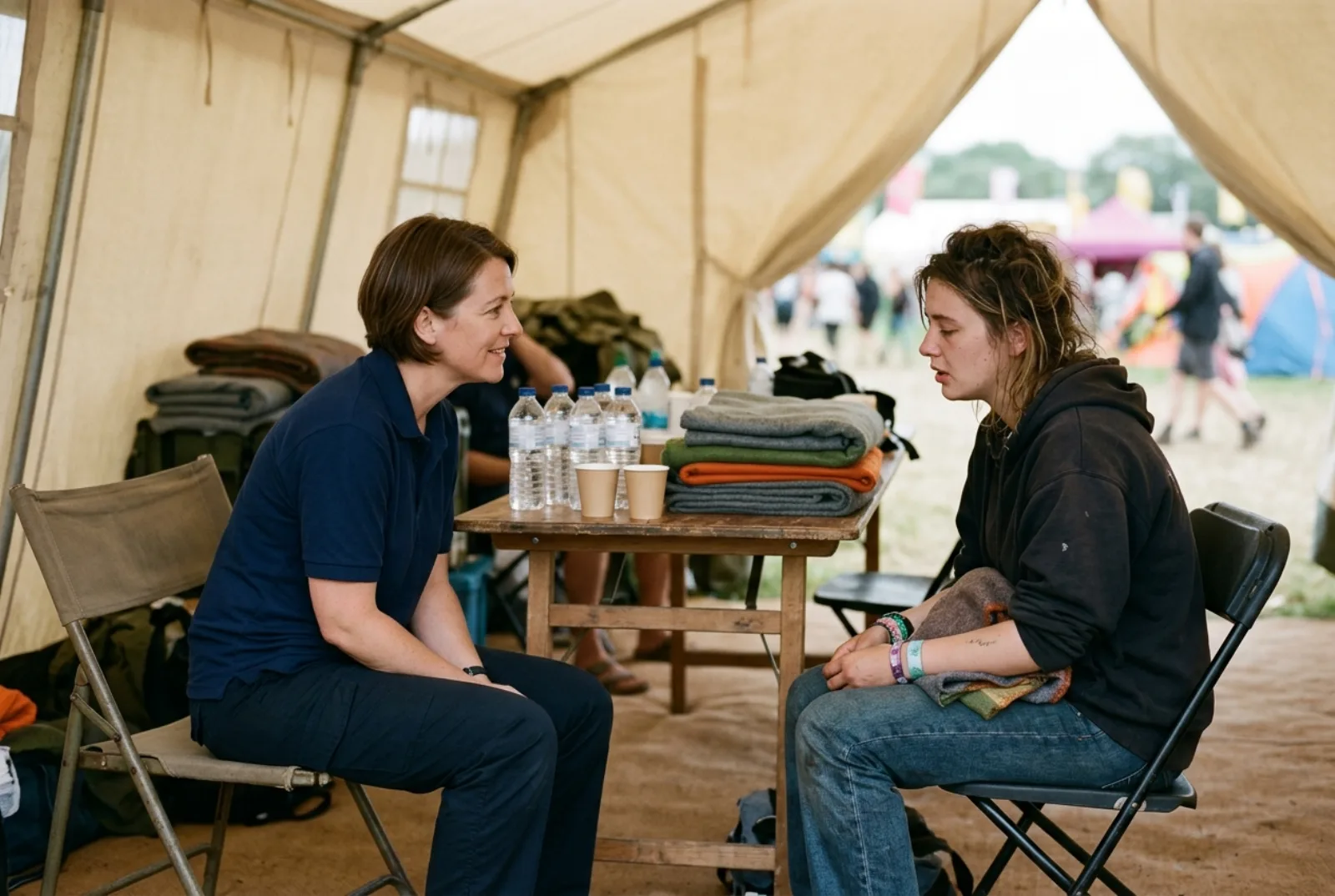
Lowering the temperature, listening, and giving someone the time and space to settle. De-escalation starts with how we speak to people.
Following the event's process for lost children and separated groups, from the first report to a safe reunion.
Recognising when a situation needs the medics, security, the police or social care, and handing over cleanly with the facts.
Writing down what happened, what was done and who it was passed to, so the record is clear for the event and for the report afterwards.
Trauma support
TRiM, or Trauma Risk Management, is a trauma-focused peer support system. TRiM practitioners are trained to spot signs of distress that may go unnoticed, through a structured risk assessment process. It was first used by the Royal Marines and was brought into use across the Army, Royal Navy and Royal Air Force from 2006.
A serious incident at an event does not only affect the public. Stewards, security, medics and welfare staff can be affected by what they have seen, and the signs are not always obvious at the time. TRiM is not therapy or counselling. It is trained colleagues noticing who may need more help, and making sure they get it.
Our welfare team hold TRiM practitioner training, so support for your crew is part of what we bring.
X2 Welfare
The person who needs welfare support is often the person most at risk. Our welfare staff know what to look for and what to do next.
Welfare and safeguarding are planned together before the event and reported together afterwards, so nothing falls between teams.
Every safeguarding concern raised at the welfare point goes straight to the event's Designated Safeguarding Lead.
We work with your team on a welfare plan that fits the event: the audience, the site, the hours, the risks, and how welfare links into security, medical and safeguarding.
Trained welfare staff on site for the hours you need, with clear reporting lines into event control, so nothing falls between teams.
A written report covering what happened, what was done and what to change next time.
Step by step
Someone comes to the welfare point, or a team member, steward or friend spots that they need help.
A quiet space, water, a blanket and a calm conversation to find out what is going on.
We support the person and decide together what happens next: rest and recover, find their friends, or bring in another team.
They go back to the event, to their friends or home safely, or we hand over to medical, security, the police or social care. Every case is written up and reported through the event's reporting line.
Joined up
Welfare reports into event control, so the whole site knows what is happening.
When there is a risk to the person or to others, we bring in security and brief them.
When someone needs clinical care, we hand over to the medics with what we know.
Every safeguarding concern goes to the event's DSL.
When a crime or a serious risk is involved, the police get a clear account.
When a child or vulnerable adult needs support beyond the day, a referral is made through the DSL.
X2 Welfare
Festivals and outdoor events. Concerts and arenas. Sports tournaments and fan zones. Conferences and exhibitions. Hotels, hospitality and venues. Any event where people may need looking after, whatever their age.
X2 Welfare
Welfare at events is often an afterthought bolted on to security or first aid. We treat it as its own discipline, planned and staffed by people who understand safeguarding, because the person who needs welfare support is often the person most at risk. One team, one plan, one report.
Tell us about the event and we will come back with how X2 Welfare could fit it.
Fill in the form below and a member of our team will be in touch soon.